
Essays: (To Simplified Chinese Script) |
文章: (到简体版) |
Historic Ethnic Places of Worship —
|
北溪廟對比加州傳教站 馮欣明著,2025年 (除另有說明外,所有照片均由作者拍攝) |
| I had already been to the Chinese Bok Kai (Guangdong Province Taishan dialect for beixi 北溪) Temple in Marysville, California, which belongs to the Chinese religious traditional of “folk” or “popular” Daoism, and so I thought to myself, for balance let's go see some historic ethnic places of religious practice that belong to a different ethnicity and a different religion. In California that meant the famous Spanish Missions with the oldest dating from 1769 — being Spanish in origin, they are naturally associated with the Hispanic population. To my surpise, after visiting and some deeper inquiry, I discover that the Temple and the Missions differ in more than just ethnicity and religion. There exist fundamental differences in founding purpose, original driving force, sources of financial support, and role in society. In a word, in their historical and social essences, they have been completely different. Of course, they are very different religiously as well. At the same time, however, I also discover that they share a common religious trait that differentiate them from the Protestant churches that occupy America's religious mainstream. | 我之前去過加州瑪麗斯維爾市的北溪廟 Bok Kai Temple(英語名字“Bok Kai”是廣東省台山方言對“北溪”的音譯),而它屬於中國宗教傳統中的“民間道教”,所以我覺得,作為比較,也應該去看看一些同樣是歷史悠久但屬於其他宗教的民族宗教場所。在加州,這就意味著名的西班牙傳教站了。令我驚訝的是,參觀並進行了稍為深入的瞭解之後,我便發現了北溪廟和西班牙傳教站之間的區別遠不止於宗教信仰的不同。雖然北溪廟和西班牙傳教站都有百多年的歷史,但在創建目的、最初動力、資金來源、及社會作用等方面都存在根本性的差異,兩者的歷史和社會本質是完全不同的。當然,宗教上他們也是非常不同的。但與此同時,我也發現它們在宗教上有一個共同的特點,使它們與處於美國宗教主流的基督新教教堂有所不同。 |
Here are the four places of worship I went to:
|
以下是我參觀過的四個宗教場所:
|
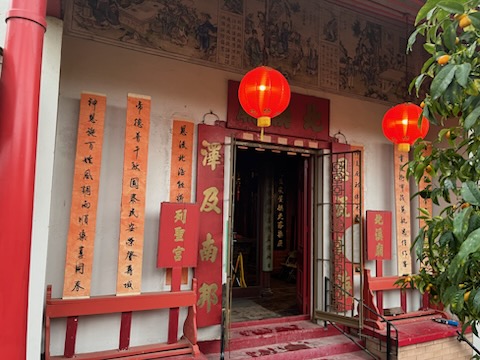
↑ Bok Kai Temple 北溪廟 |
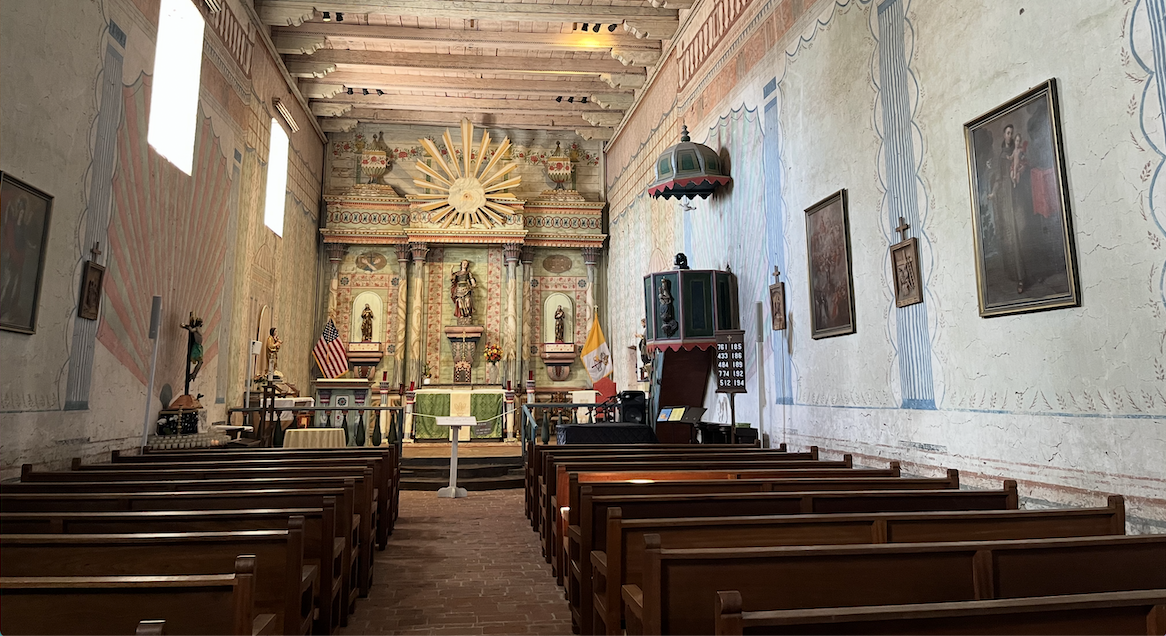
↑ Mission San Miguel 聖米格爾傳教站 |
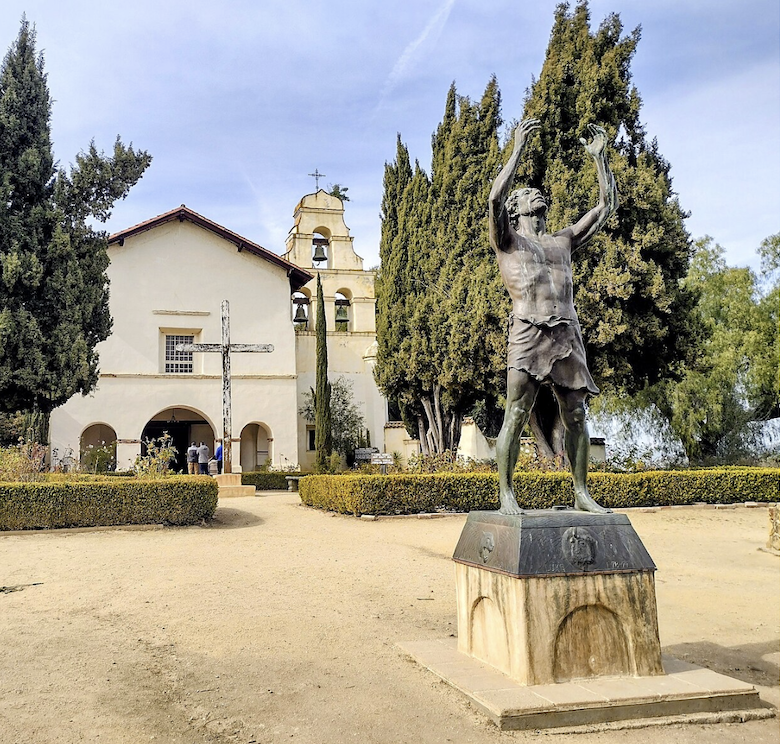
↑ Mission San Juan Bautista 聖胡安包蒂斯塔傳教站 (Photo from en.wikipedia - Mission San Juan Bautista) |
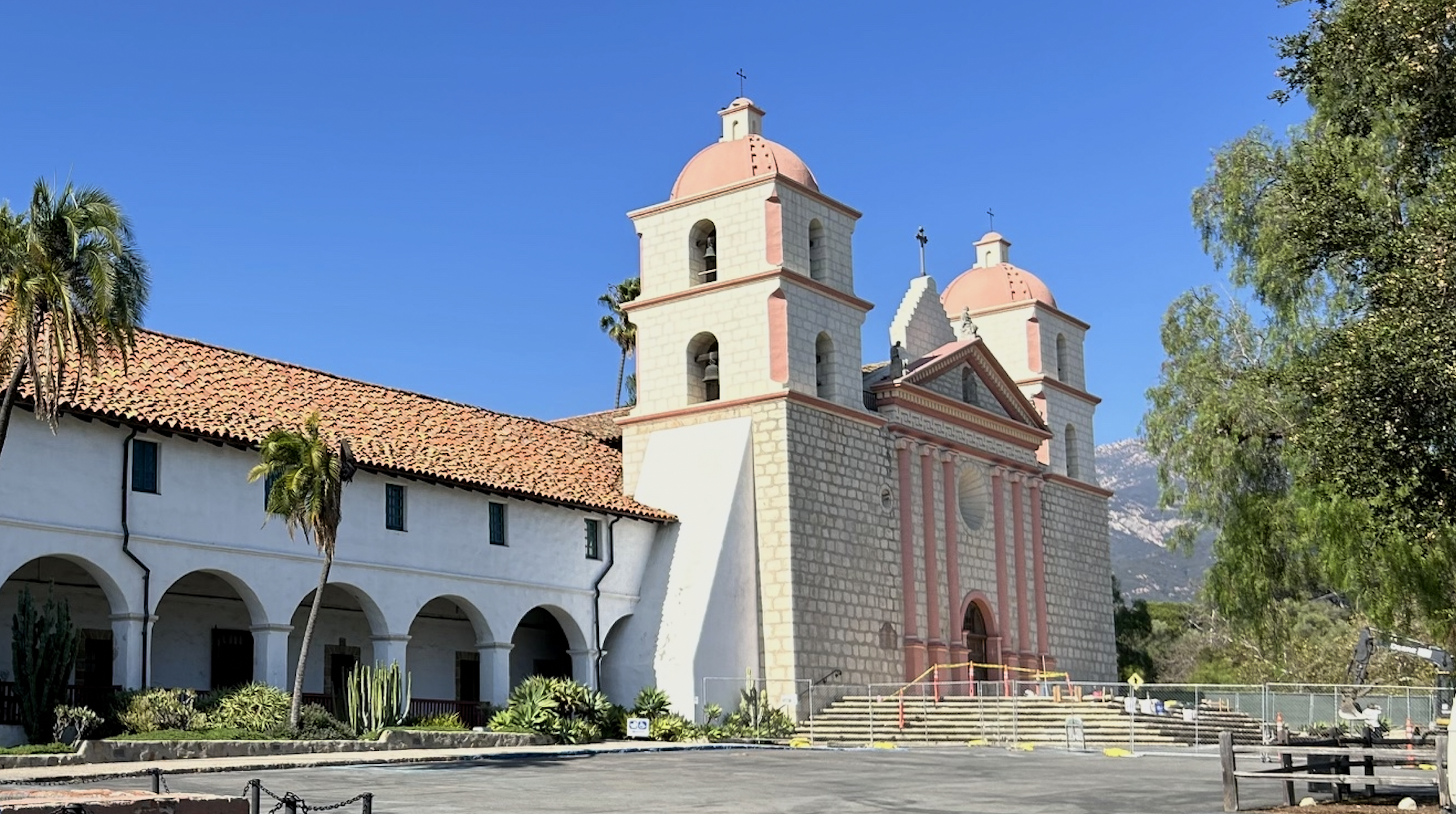
↑ Mission Santa Barbara 聖巴巴拉傳教站 |
1. Different Founding Purposes and Driving ForcesFirst, the founding purposes were different. For the Chinese Bok Kai Temple, it was founded in the 1860s to be a local place for religious practice, for the Marysville Chinese community to pray for personal safety, good fortune, personal and business success (including gold prospecting), flood protection, and local peace and order when the Chinese community lacked the same protective resources as the white community. Also it was for organizing local community activities, rituals, holiday celebrations and parades, etc. Its building was funded privately by the community, through volunary donations. Marysville at the time was a hub where the river boats docked, carrying inland those involved in the gold rush itself or the gold rush economy both Chinese and non-Chinese from San Francisco and beyond, who then regrouped, resupplied, and dispersed further into northern California. Naturally, once there were enough Chinese settled here, there was enough need to sustain an established, permanent place of religious practice. |
一、不同的创建目的及动力
首先,它們的創建目的截然不同。中國的北溪廟建於19世紀60年代,是瑪麗斯維爾華人社區自發建立的當地祭拜場所,用於祈求個人平安、福祉、生意和包括淘金等事業的成功、社區防洪、在缺乏白人社會所得到的國家保護之下的治安良好等,亦用於組織社區活動、儀式、節日慶祝及遊行等。資金由社區成員自願捐款籌集。當時的瑪麗斯維爾是河船停靠的樞紐,運載著參與淘金本身或和參與跟淘金有關的經濟體系的華人和非華人。他們在此重新集結、補充物資、然後進一步分散前往北加州。很自然地,一旦有足夠的華人聚居在這裡,便產生了足以維持一個長久性祭拜場所的需求。 |
| The Spanish missions, in contrast, were established beginning in 1769 to evangelize and convert indigenous peoples under colonial authority as part of the expansion of the Spanish Empire's New Spain, and these missions were initially funded by the imperial government and later maintained through production with coerced native labor on land now controlled by the missions. They were planted by outsiders in the frontiers of New Spain, not natural outgrowths of emerging communities — there were no local colonial settler communities able to sustain compounds of such size on their own. | 相比之下,始建於1769年的西班牙傳教站,目的在於向殖民政府控制之下的原住民傳播基督教並使其皈依,這是西班牙帝國“新西班牙”殖民地擴張計劃的一部分。這些傳教站最初的資源來自帝國政府,後來的運營則依靠強迫原住民在傳教站控制的土地上進行生產。傳教站是由外來者在新西班牙的邊疆地區即加利福尼亞建立的,並非新興社區自然發展的結果,當時沒有哪個當地殖民定居社區能夠獨自維持這種規模的建築品。 |
2. Differences in Size and ScaleSecond, there is a big difference in size and scale of Bok Kai and the missions. The original 1860s temple building was a small, single-hall shrine. Then, as Marysville's Chinese community grew and stabilized, it was replaced in 1880 by a somewhat larger building that is still the existing temple building today. Since then until the early 20th century, shrine and altar spaces were installed, and ancillary rooms for storage, offerings preparation, meetiings, and caretaker spaces were gradually added adjacent to the temple building. In the mid-20th century, however, as the Chinese population declined, temple expansion stopped. The temple's scale has always been that of an ordinary community public place. |
2. 不同的尺寸与规模
第二,北溪廟與傳教機構在規模和體量上有很大的不同。最初建於1860年代的寺廟是一座小型單堂式建築物。後來,隨著瑪麗斯維爾鎮華人社區的增長和穩定,1880年一座規模稍大一些的建築物取代了原有的寺廟,這座建築物至今仍然就是北溪廟殿堂。從那時起到20世紀初,寺廟內陸續增設了神龕和祭壇,並在寺廟建築旁逐步增建了用於儲藏、準備供品、會議以及供服務人員使用的附屬房間。但是,到了20世紀中期,華人人口開始減少了,寺廟的擴建也隨之停止。所以,這座寺廟的規模始終都只是一個普通社區公眾場所。 |
|
For the Spanish Missions, however, right from the beginning they were monumental scale. They were not just places of
worship but were also residential facilities, built to house over 1,000 Native Americans who were forcibly brought there
to be converted into Christianity and to labor to build the missions
— plus the friars, the soldiers who prevented baptized native from escaping and enforced discipline, and their families; the
non-native artisan, farmer, and muleteer settlers along with their families, and the non-native skilled laborers
like blacksmiths, carpenters, masons, and overseers. The missions held populations of entire small towns.
|
相比之下,西班牙傳教站從一開始時就規模宏大。它們不僅是宗教場所,還是居住設施,旨在容納1000多名被帶到這裡然後被強制留下來接受基督教信仰灌輸並參與修建傳教站的原住印第安人——此外還有修道士、負責阻止受了洗禮的原住民逃跑及負責執行紀律的士兵及其家屬,以及非原住民工匠、農民、騾夫及其家屬,還有鐵匠、木匠、泥瓦匠和工頭等非原住民技術工人。這些傳教站的人口規模相當於一個小鎮。 |
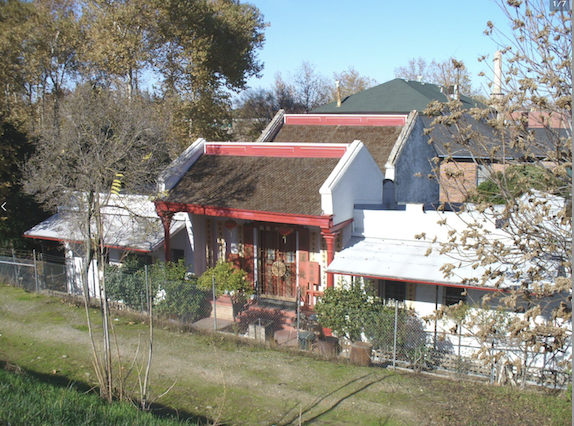
↑ The Bok Kai Temple compound, note scale 北溪廟的規模 (Photo by Isaac Crumm at en.wikipedia - Bok Kai Temple) |
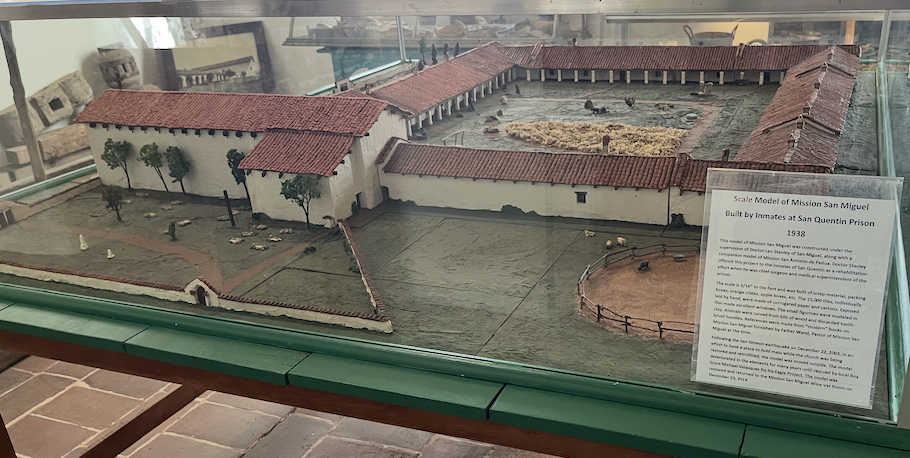
↑ A Model of the Mission San Miguel compound, for its scale note the gate at the front and then see actual photo of gate below left 聖米格爾傳教站,要瞭解其規模請注意圖中前門然後參考左下方的前門實照 |
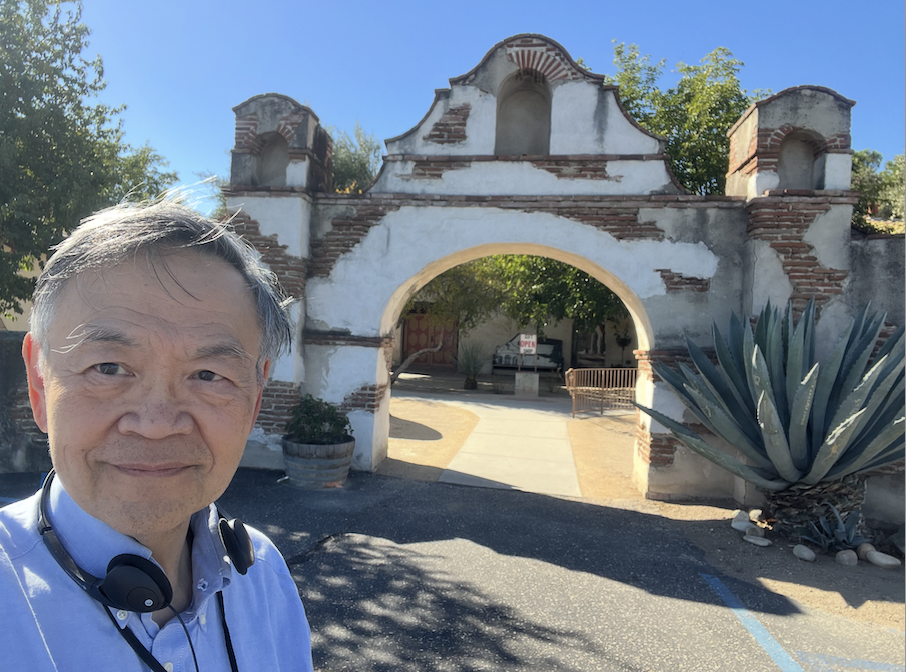
↑ Actual photo of gate at Mission San Miguel 聖米格爾傳教站的前門實照 |
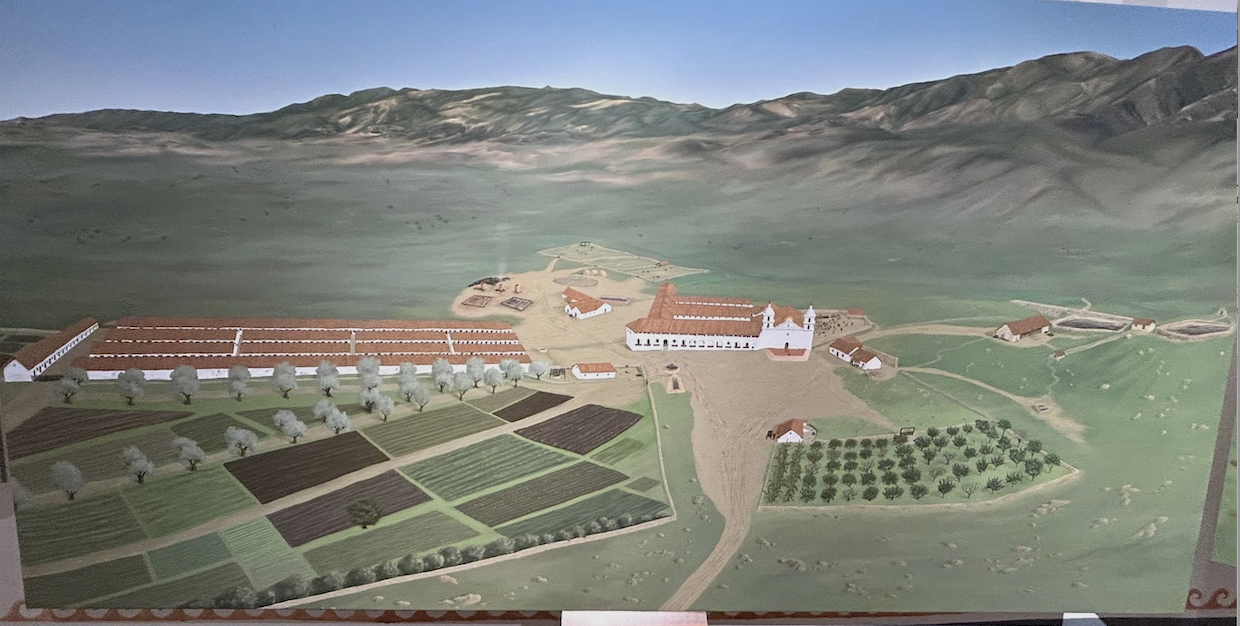
↑ A contemporaneous sketched view of the Mission Santa Barbara compound 聖巴巴拉傳教站當年的寫真圖 |
3. Religious and Non-religious Social ActivitiesFor social activities that are religious, the biggest difference is that the Chinese Daoist Bok Kai Temple did not engage in proselytizing or converting anyone, whereas the Catholic Missions evangelized energetically and converted natives, ultimately baptizing them, with one of the aim being to change them into loyal subjects of the Spanish Empire. |
3. 宗教性及非宗教性的社會活動
兩者在宗教性的社會活動上,主要差別是:中國道教的北溪廟沒有向他人宣道傳教或使其皈依,而天主教的傳教站則積極地致力於向原住民宣道傳教及使其皈依,最終給他們洗禮,目的之一是把他們轉變為忠於西班牙帝國的臣民。 |
| For non-religious activities, the Bok Kai Temple was, as in other 1800s Chinese American community temples, a community hub for men in foreign lands whose families remained in China. The Temple was a respected place with moral gravity, where truth was witnessed before gods and daring to lie even there carried grave cosmological as well as reputational and "face" risk. There, people felt the need to and were pressumed to behave with goodwill and generosity, to help each other, to engage in fair dealing, to speak honestly, and to keep promises made. The Temple reminded people that both community reputation and divine favor were shaped by one's conduct. Therefore, the temple was where leaders mediated disputes, coordinated mutual aid, especially burials, organized festivals and festival parades that increased the bonding among these men, and furthered social ties through exchange of news and introductions to contacts. These functions were carried out through moral authority and voluntary participation rather than formal legal administration and enforcement. Having a temple in the community made accountability to the gods necessary, which in turn reinforced accountability to community. In the Chinese communities in those days, truth, trust, mutual help and prevention of abuse were not enforced by law but by reputation and moral consequences, and here the temples served as the moral anchor. Bok Kai provided the Chinese community with very important positive effects. | 至於非宗教性社會活動,北溪廟就像19世紀由家人留在中國而自己遠在他鄉的男性組成的其他華人社區的寺廟一樣,是一個社區中心。寺廟是一個受人尊敬、具有道德權威的地方。人們在此向神明見證真相,竟敢在這裡撒謊不僅會招致神罰,還會嚴重損害聲譽和面子。在這裡人們感到有必要,也被認為必會,以善意和慷慨對待他人,互相幫助,公平地與他人交易,說真話,並踐行作出的承諾。寺廟提醒人們,個人行為會影響他社區里的聲譽並決定神明會否眷顧。所以社區領袖們便在這裡調解糾紛,組織增加人們情感聯結的節日慶祝及遊行,協調尤其是喪葬等互助事宜,並通過交流信息和介紹人脈來維繫社會關係。這些社區功能是通過道德權威和自願參與來實現的,而不是通過正式的法律管理或強制執行。社區中有寺廟的存在,使人們對神明的責任感更加強烈,從而也增強了對社區的責任感。在當時的華人社區,誠信、信任、互助、和權力濫用的防止並非依靠法律來維護,而是依靠聲譽和道德後果,而此中寺廟正是道德的基石。所以,北溪廟為華人們提供了重大的積極作用。 |
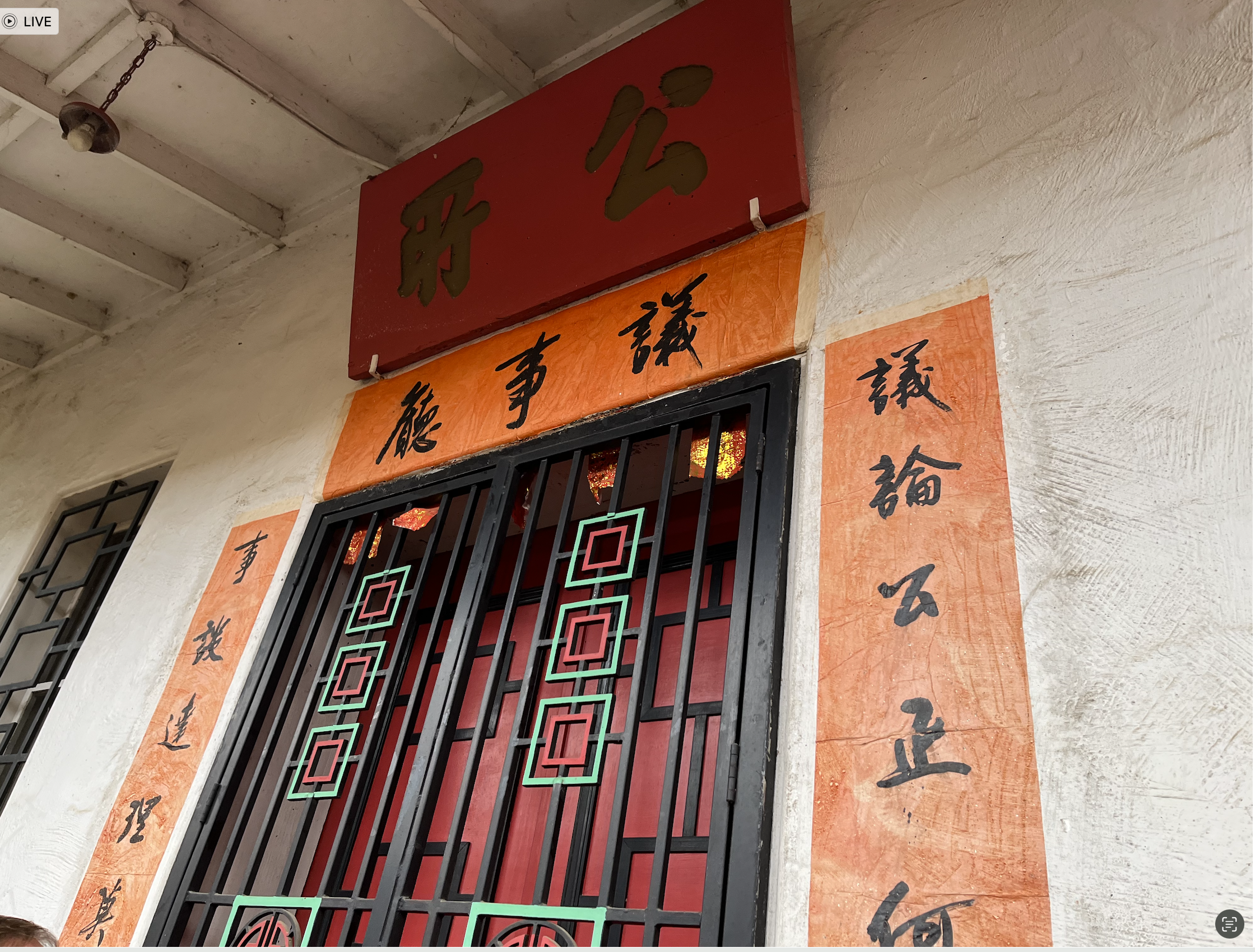
↑ Bok Kai Temple's Community Office and Meeting Hall 北溪廟的公所和議事廳 Couplet on sides: "Discuss with fairness..." and "Talk matters over to achieve reasonableness..." 兩邊對聯“議論公正..."和"事談達理..." |
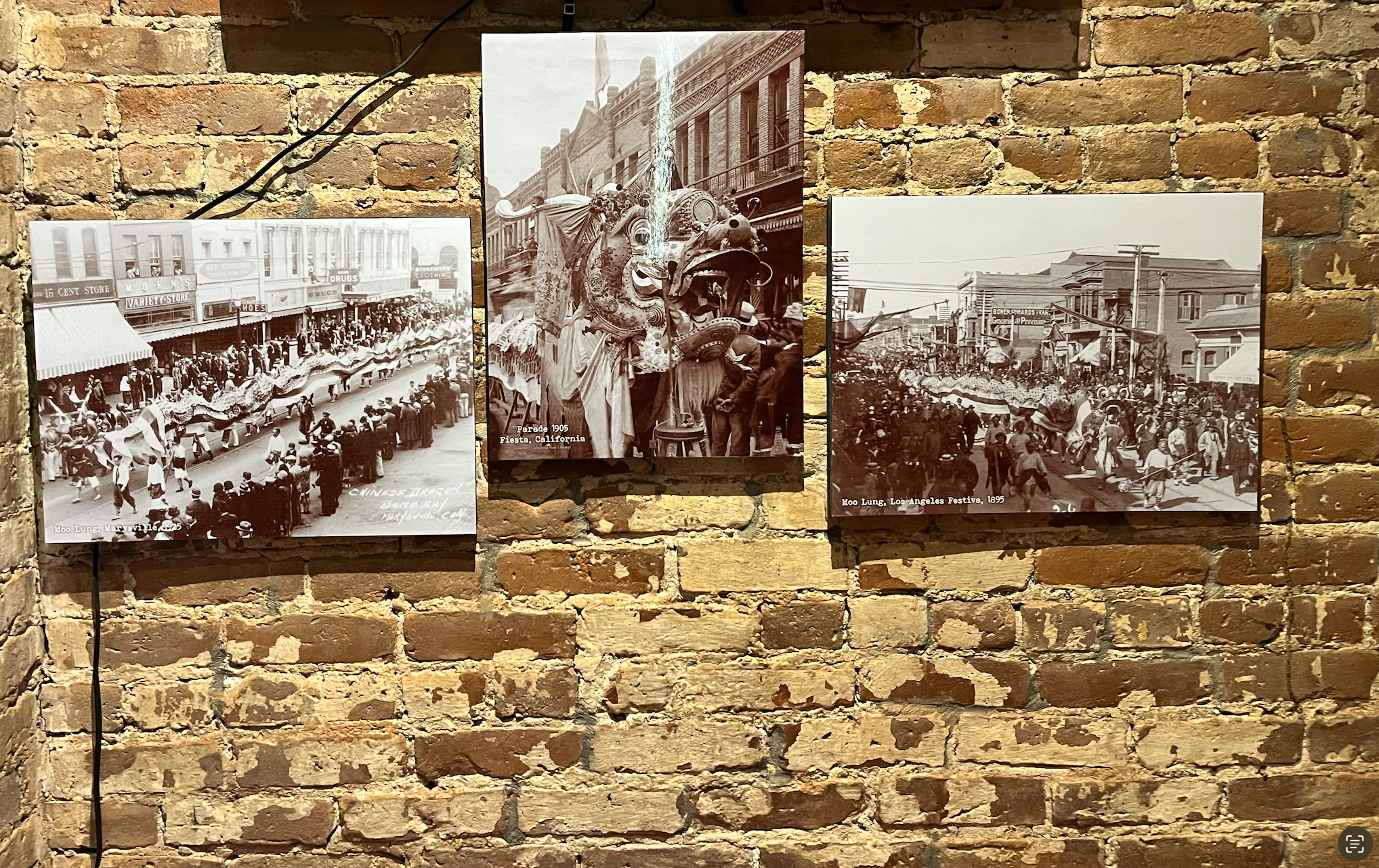
↑ Parade in Marysville organized from the Bok Kai Temple — from the small Temple museum adjoining the Temple Hall 在北溪廟組織的瑪麗斯維爾市農歷新年遊行,攝自廟旁的小博物館 |
| For non-religious activities, the Missions were all-inclusive work/economic, social/residential, educational, healthcare, quasi-judicial, and administrative centers, and were also instruments of empire. The main work/economic activities were one, construction of the Missions, which involved heavy, sustained labor that relied mainly on human power where overwork was common and contributed to illness, injury and mortality; and two, food, textile and craft production to sustain the residents economically. Assignment of daily work, enforcement of work schedules, punishment for disobedience or escape was carried out here. Social/residential-wise, the dormitories separated men and women, restricted movement outside mission grounds, and supervised family formation and sexual relations. For education, Spanish, trades and agricultural skills, and behavior norms were taught — children were often separated from parents for instruction. As quasi-judicial centers, missions delivered immediate, summary justice without debate and could mete out corporal punishment, public discipline, and detention. As administrative centers, missions kept registers of baptismals, marriages, burials, and population counts for colonial surveillance. As instruments of the Spanish Empire, the missions supplied food and goods to nearby garrisons, fortified settlements, and represented Spanish presence on disputed territories. | 在非宗教性社會活動方面,傳教站是集工作/經濟、社會/居住、教育、准司法和行政功能於一體的綜合中心,也是帝國的工具。主要的工作和經濟活動:其一是建造傳教站,這是持久、艱苦的、主要靠人力的勞動,過度勞累很普遍,導致了疾病、創傷和死亡;其二是生產糧食、紡織品和手工藝品,以維持傳教站人們的生活。傳教站負責分配日常工作、執行工作時間表,並對不服從命令或逃跑的原住民進行懲罰。在社交和居住方面,宿舍將未婚男女分開,限制人們在傳教站範圍外的活動,並監督家庭組建和性關係。在教育方面,傳教站教授西班牙語、貿易和農業技能以及行為規範,而兒童則通常與父母分開接受教育。作為準司法中心,傳教站可以不經辯論就立即進行簡易審判,並可以實施體罰、公開懲戒和拘留。作為行政中心,傳教站保存著洗禮、婚姻、葬禮和人口統計的記錄,以便殖民當局進行監控。作為西班牙帝國的工具,傳教站向附近的駐軍和設防定居點提供食物和物資,並在爭議領土上代表西班牙的存在。 |
| Not counting the possible spirial benefits to the souls of the natives of conversion to Christianity, the practical effect of the Missions was quite disastrous for the natives, who constituted the great majority of the Mission's dwelling population. The worst effect for the Mission natives was an overwhelming death rate from the "white man's diseases" such as influenza, tuberculosis, smallpox, etc., to which they had zero immunity and which spread rapidly in the crowded condtiions of Mission dormitories. An estimate of the total California native population in the 1840s, after the Missions had forcibly confined baptized natives for 64 years from 1769 to 1833, point to an approximately 50% population decrease (footnote 1). | 如果不考慮皈依基督教可能為原住民的靈魂所帶來的精神性益處,傳教站實際性的影響對構成傳教站大多數居住人口的原住民來說是相當災難性的。對傳教區原住民影響最嚴重的是例如流行性感冒、肺癆(肺結核)、天花等“白人疾病”所導致的極高死亡率。他們對這些疾病毫無免疫力,而這些疾病在擁擠的傳教區宿舍中迅速傳播。據估計,經歷了64年即1769年到1833年的受洗禮原住民被強迫居留在傳教站之後的1840年代,全加州原住民人口減少了約50% (注1)。 |
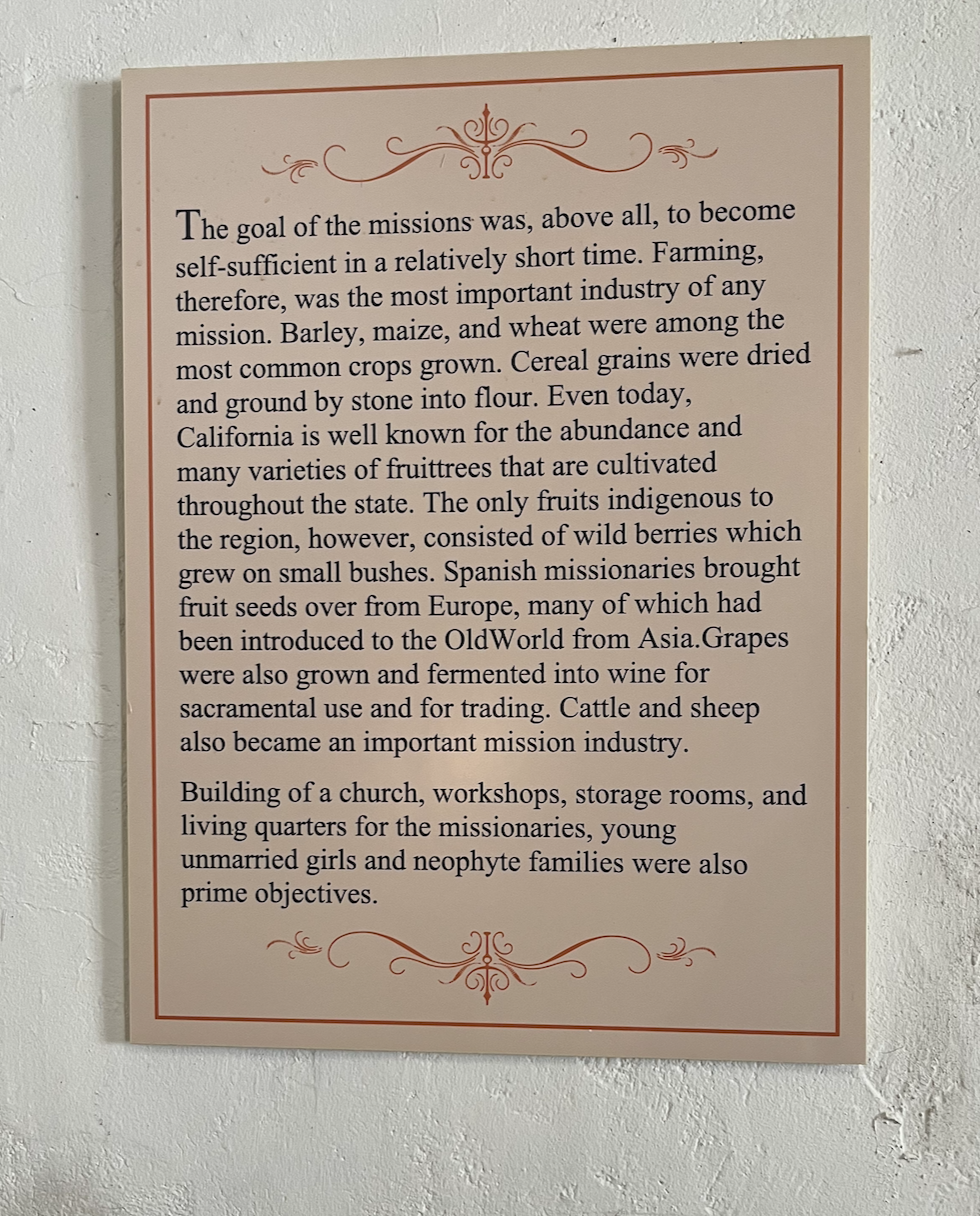
↑ Farming at the Mission — from exhibit at Mission San Miguel 傳教站的耕作,攝自聖米格爾傳教站的展覽室 |
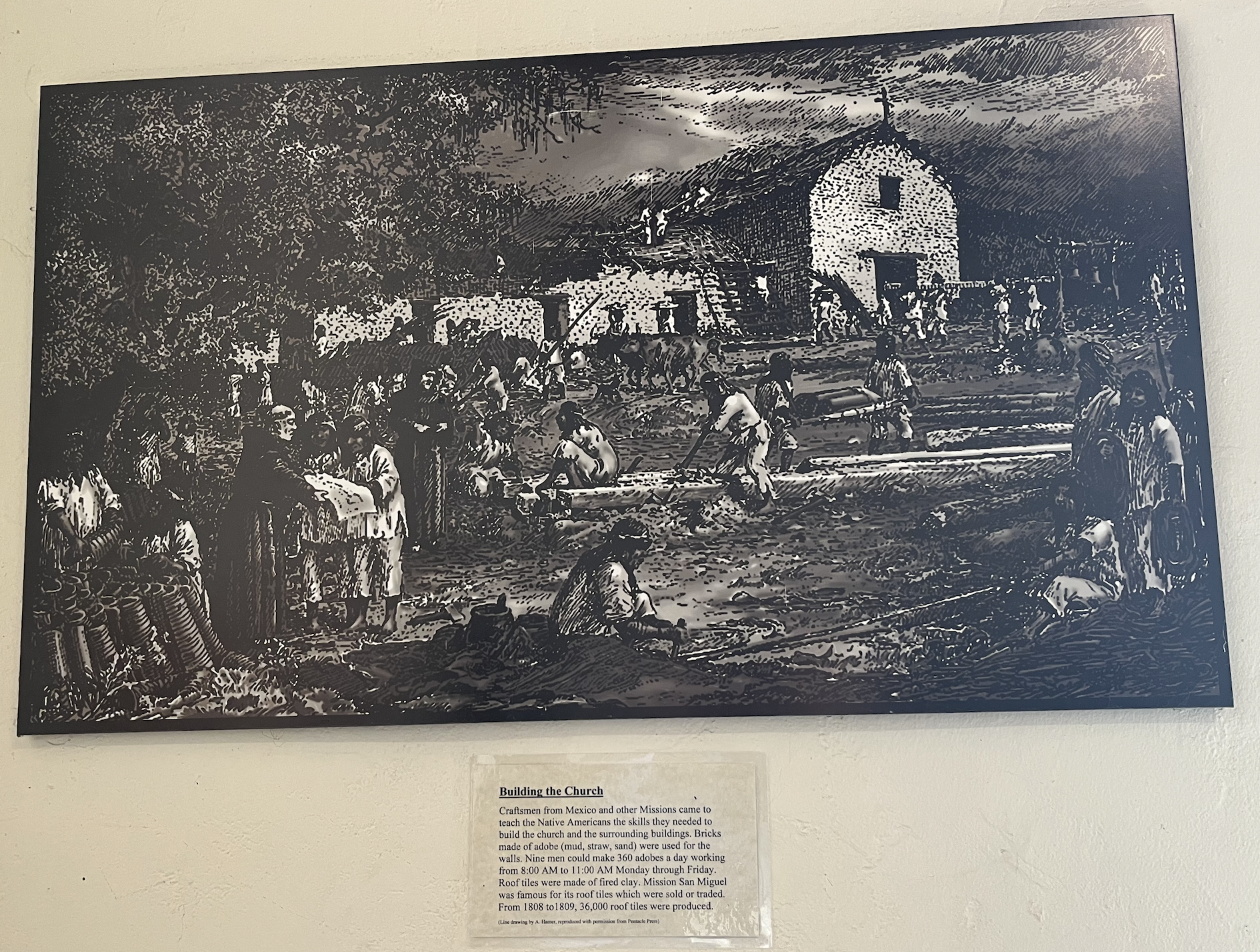
↑ Construction at the Mission — from exhibit at Mission San Miguel 傳教站的建築,攝自聖米格爾傳教站的展覽室 |
4. Bok Kai Temple's Popular Daoism and its GodsIn religious doctrine, what the Bok Kai Temple follows is the folk or popular Daoist tradition, which is polytheistic and has many deities. This tradition is eclectic and embraces all kinds of historical personnages, legendary and mythical beings, as well as almost all Buddhist personnages and beings. The Daoist divine pantheon is an imperial government bureaucracy headed by the Jade Emperor. In orthodox Daoism, the Three Purities or Sanqing 三清 are considered supreme, above the Jade Emperor. However, in popular folk Daoism as well as in imperial political doctrine about the divine, the Jade Emperor is considered supreme, and the Three Pure Ones are merely respected elder advisors to the Jade Emperor. Of course, this was because the Jade Emperor represented Heaven, while emperors were merely Sons of Heaven, and so the Jade Emperor's status was even higher than that of the emperor, making it politically infeasible for any higher deities than the Jade Emperor to exist. Below the Jade Emperor is a whole host of heavenly ranked officials both civil and military, mirroring the historical Chinese imperial bureaucracy. |
四、北溪廟的民間道教及其神祇
從宗教教義來看,北溪廟所追隨的是中國的民間道教傳統,有很多神祇,來自多個方面。這種傳統兼收並蓄,涵蓋了各種歷史人物、傳說和神話靈體,以及幾乎所有佛教人物及靈體。道教神祇體系是一個以玉皇大帝為首的等級分明的官吏體系,在正統道教眼裡玉皇大帝之上是至高無上的道教的三清,但是在民間道教和歷代王朝政治論述里玉皇大帝才是最高的,三清只是玉帝的尊老顧問。這是因為玉皇大帝代表天,而皇帝則只是天子,所以玉皇大帝的地位比皇帝還更高,政治上就不可能有更高的神處於玉皇大帝之上了。玉皇大帝之下則是眾多天界官員,包括文官和武官,與中國王朝歷史上的官吏體系高度相似。 |
| This system of divine officialdom was actually created by the Chinese imperial governments. Throughout Chinese dynastic history, emperors frequently "conferred divine titles" on deceased personnages and deities, and thus elevated them to the status of heavenly officials, dukes and marquises. Also, emperiors often "upgraded" already titled deities. A number of emperors conferred the title of Di" 帝, which is the second word in the Chinese term for emperor Huang Di 皇帝, upon the most important deities and deceased heroes or highly venerated personnages. This Di title, however, was not the same as the human world emperor; their status was clearly lower than his, nor were they kings, since their status was higher than that of a king. Therefore, the English translation should not be "emperor," and I use "Great God" to render their status, avoiding officialdom titles since no positions called "Di" but lower ranked than the Huang Di (emperor) in the human world. The term also conveys the intent of the emperors, that other than the Jade Emperor, these "Di" gods were above any other divine official, dukes, or even the heavenly kings. The main deity of Beixi Temple, the Northern Great God or Beidi, received his title of Di from a Song Dynasty emperor around 1000 AD; before that, his name was "Xuanwu." | 其實這個神祇官吏體系是由歷代王朝政權所塑造出來的。中國王朝歷史上經常“封神”,把神祇和民間神化了的已故人物封為天上的官和侯爵,亦很多時把已經封了的神“升級”。多個皇帝把最重要的神祇和已故英雄或特別值得尊敬的人物封為“帝”,但這個“帝”並不是皇帝,地位明確地低於人間皇帝,也不是王,地位高於王,因此英文翻譯也不應該是用“emperor”,我這裡是用了“Great God"即”大神“,這樣就避開了使用官爵職位,因為人間沒有對稱的、低於皇帝的“帝”這種官爵職位,亦把封號的原意,即除了玉皇大帝之外,這些帝都是高於其他所有天上官爵甚至天王的。北溪廟主神北帝就是被宋朝皇帝約公元1000年時冊封而得到“北帝”的名號,之前他的名號是“玄武”。 |
| It was also through this process of being inducted into the system of divine officials, albeit at lower tiers, that many local heroes and highly respected figures were deified. To deify a deceased local personnage, it was only necessary for a genuine Daoist priest, registered in the official roster of Daoist priests recognized by the divine system called the Lu 籙, to "present a petition memorial" to the Jade Emperor or the corresponding deity in charge, and then perform a consecration "eye-opening" kai-guang 开光 ceremony for the statue. | 也正是通過這種被納入神祇官吏體系的過程,很多地方性的英雄人物和德高望重人物得以被神化,雖然他們的官職是比較低一點的。要把一個去了世的地方人物神化,只需要找一位真正的、在被神祇體系認可的道士名冊(籙)上注了冊的道士,向玉皇大帝或相應的負責神祇“呈遞奏章”,然後為該人物的雕像進行“打開眼睛”的“開光”儀式。 |
| Like other Chinese common folk community temples, however, Bok Kai is not a true orthodox Daoist temple, but is a "folk" or "popular" Daoist temple. True, orthodox Daoist temples are rather elitist: they have voluminous scriptures called the daozang 道藏 and are run by professional priests called daoshi 道士 or priestesses called daogu 道姑, who are ordained and registered on the Daoist register called the Lu — they have been “given the Lu 授籙”, which endows them with power to call up and give orders to local deities. In true Daoist temples the main altar has The Three Purities or Sanqing 三清, three elderly figures who represent the primordial energies or formation stages of the universe. Bok Kai, on the other hand, is run, like most popular Daoist community temples, by a local communittee of lay persons and back in the early days may or may not even have a full time caretaker, let alone professional priests or priestesses. It has a "messy", eclectic altar, and the main god is not the Three Purities but a deity chosen from the heavenly bureaucracy. Often the deities in such temples are selected because their powers match local needs. An example is that the Great God of the North or Beidi 北帝, the main god in Bok Kai, controls floods, for which there is a community need in the 1800s river town of Marysville. Despite levees, the Yuba River flooded regularly and severely during the winter rains, often catastrophically, especially after hydraulic mining upstream began in the 1850s and dumped large amounts of sediment into the Yuba River, raising its beds. | 跟中國民間廟宇一樣,北溪廟並非真正的正統道教寺廟,而是“民間道教”寺廟。真正的正統道教寺廟比較精英化:它們擁有卷帙浩繁的經書,稱為《道藏》,由專業的道士或道姑主持,而他們都經過了“授籙”,即在道教名冊(稱為“籙”)上注了冊,從而獲得呼喚和命令地方神靈的權力。在真正的道教寺廟中,主神壇供奉的是三清,即三位代表宇宙原始能量或形成階段的年長神祇。而北溪廟則由當地社區人士小組管理,當年甚至全職的看守工作人員都可能時有時無。神壇供奉的神有些“雜亂”,主神並非三清而是來自天神官吏體系的某位神。這類寺廟的主神通常是根據其神力是否符合當地社區需求而選定的:例如,北溪寺的主神北帝掌管洪水,而1800年代位於河畔的瑪麗斯維爾鎮正需要這樣的神祇。當年雖然有堤壩,但是尤巴河在冬季降雨期間仍然經常發生嚴重的、很多時災難性的洪水,特別是在1850年代上游開始了水力採礦之後,大量泥沙被傾倒入尤巴河、導致河床抬高。 |
The gods at Bok Kai:
|
北溪廟的神:
|
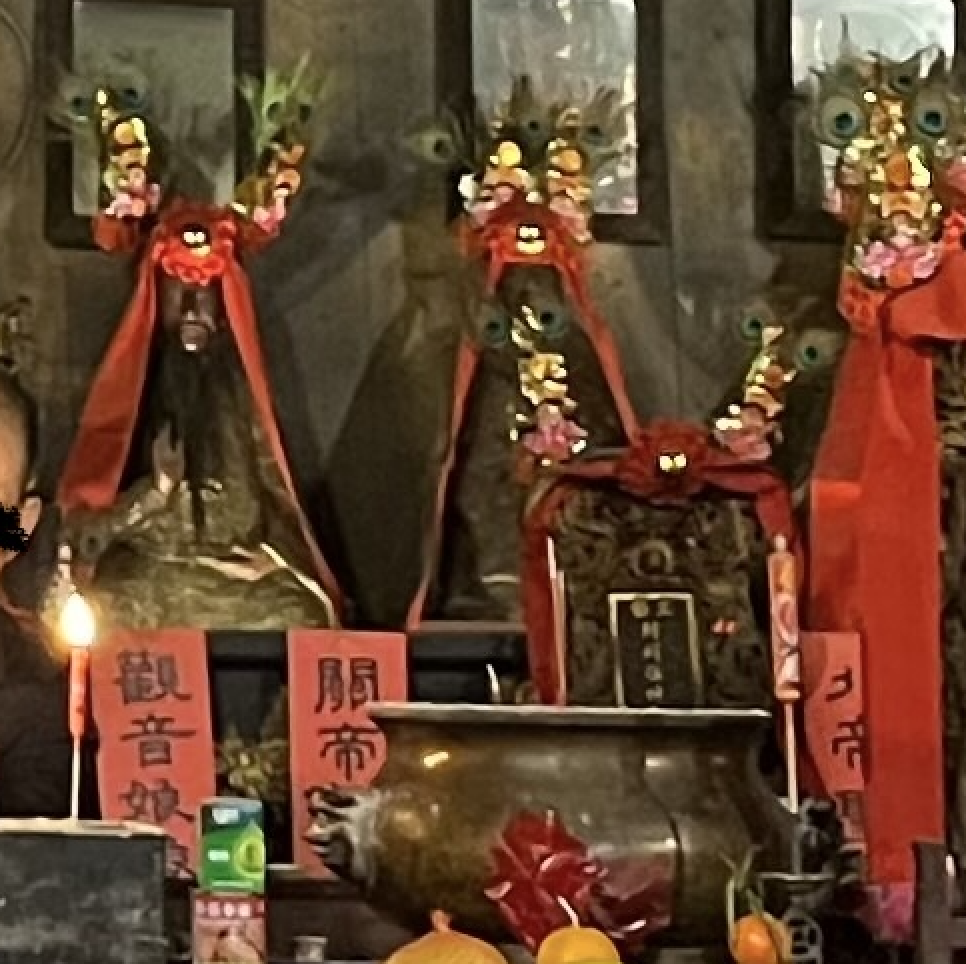
↑ Name tablets of the deities Guanyin and Guan Di, Beidi is to the right and half obscured 觀音和關帝的神牌,北帝在其右,被掩蓋了一半 |
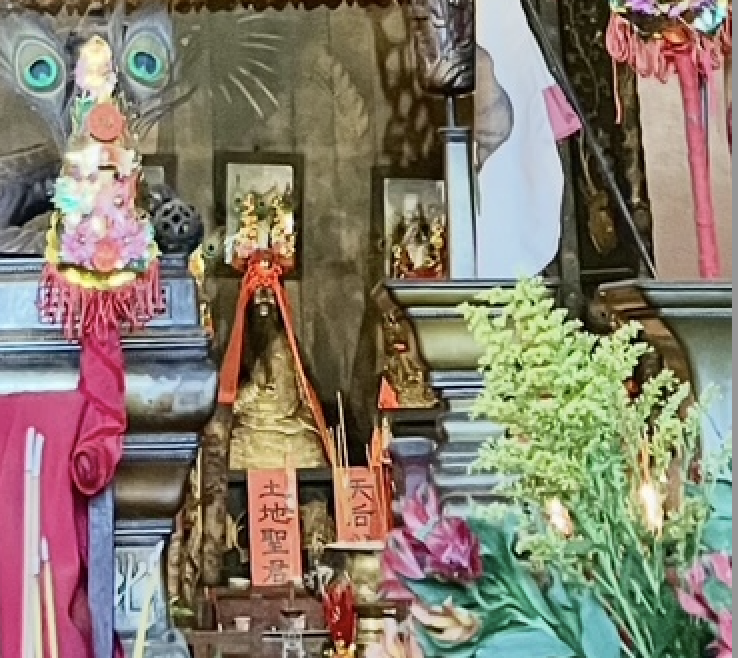
↑ Name tablets of The Earth Lord and the Sea Goddess Tian Hou 土地聖君和天後的神牌 |
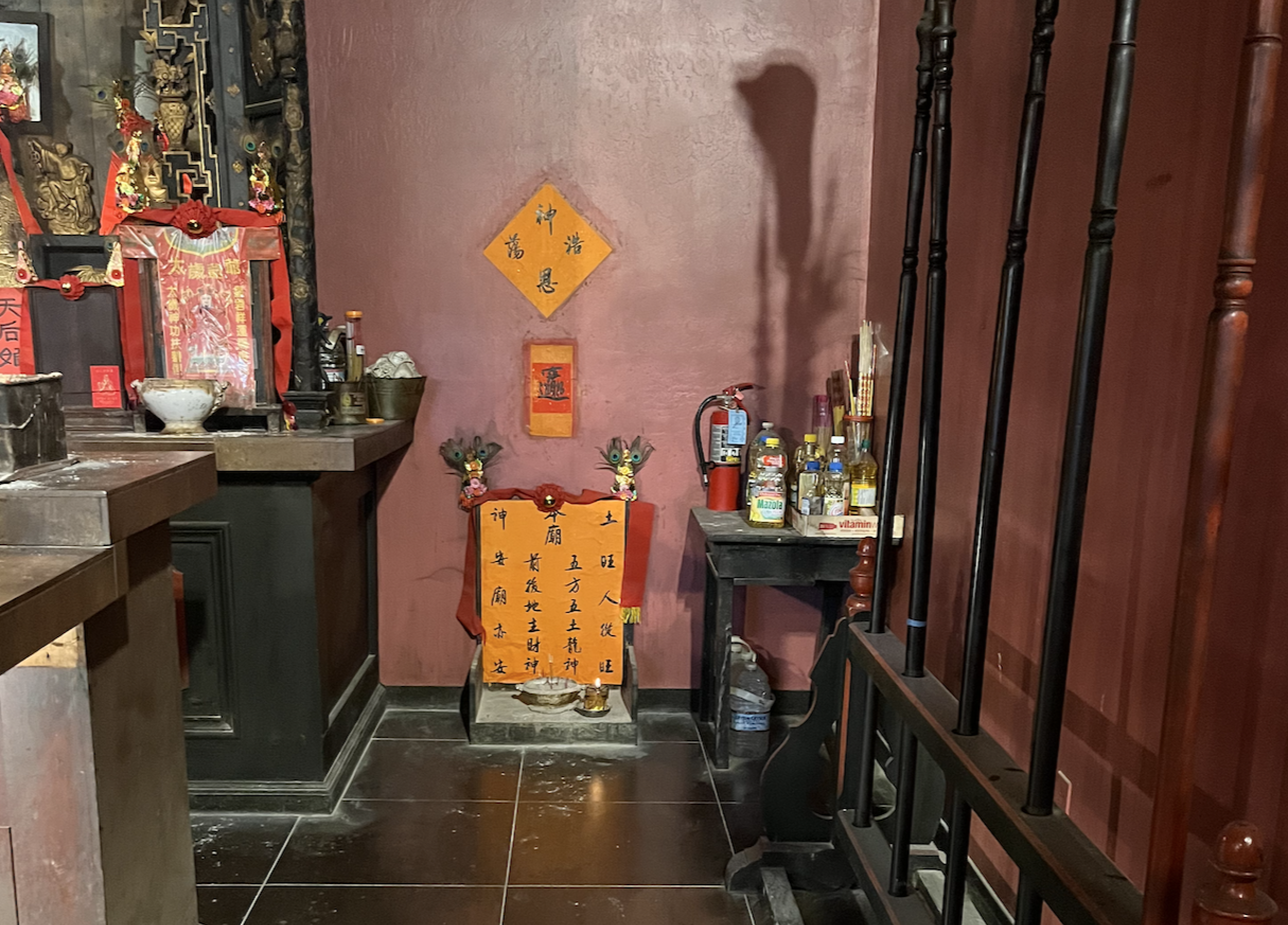
↑ Shrine to the Dragon Gods and Earth Wealth Gods 五方五土龍神和前后土地財神的小神壇 |
5. The Missions' Catholicism and its SaintsThe Catholicism of the Missions holds that there is only one god, so it appears to be the diametric opposite of the different deities with different powers that Bok Kai offers. Catholicism, however, offers not multiple gods but multiple holy beings known as saints, who have different intercession and protective powers for believers to pray to. These saints are comprised of both deceased humans and angels. Humans include the Virgin Mary, who is the highest of all saints both human and angelic; the Old and New Testament biblical personnages, and the post-biblical saints from about 100 A.D. on who have been canonized by the Catholic Church. As for angels, they are all considered holy right from their creation by God, have powers to intervene and carry messages to God, and can be prayed to. Catholic doctrine does draw a strict line between God on the one hand and saints/angels on the other, describing the deceased saints and angels as God's helpers, as having powers only given by God, and as intermediaries between humans and God, but still they can intercede on behalf of humans, have specialized powers and functions, and can be swayed by prayer sincerity. Catholic believers can select who they pray to, depending on the need. For example, Saint Michael is the chief warrior angel, so soldiers often pray to him. Therefore, the different Catholic saints may be said to function the same way as the Chinese temples' gods. |
五、传教站的天主教及其圣人
傳教站的天主教教義認為只有一位神,這似乎與北溪廟供奉的擁有不同神力的眾多神祇截然相反。然而,雖然天主教並非供奉多位神,但它供奉多位聖人,信徒可以向這些聖人祈禱,祈求他們不同的代禱和庇佑。這些聖人包括人類和天使。人類聖人包括聖母瑪利亞(她是所有聖人中地位最高的,包括人類和天使);舊約和新約聖經中的人物;以及從公元100年左右開始被天主教會封聖的聖人。至於天使,他們從被上帝創造之初就被認為是聖潔的,擁有干預人間事務並將信息傳達給上帝的能力,信徒也可以向他們祈禱。天主教教義嚴格區分上帝與聖人/天使,將已故人類的聖人和天使描述為上帝的助手,他們的能力都來自上帝,是人類與上帝之間的中介,但他們仍然可以為人類代禱,擁有特定的能力和職能,並且會受到祈禱者虔誠度的影響。天主教信徒可以根據自己的需要選擇祈禱的對象。例如,聖邁克爾是首領天使戰士,因此士兵們經常向他祈禱。因此,可以說各個天主教聖人與各個中國寺廟神祇起著同樣的作用。 |
The saints for our three Missions are:
|
三個傳教站的聖人是:
|
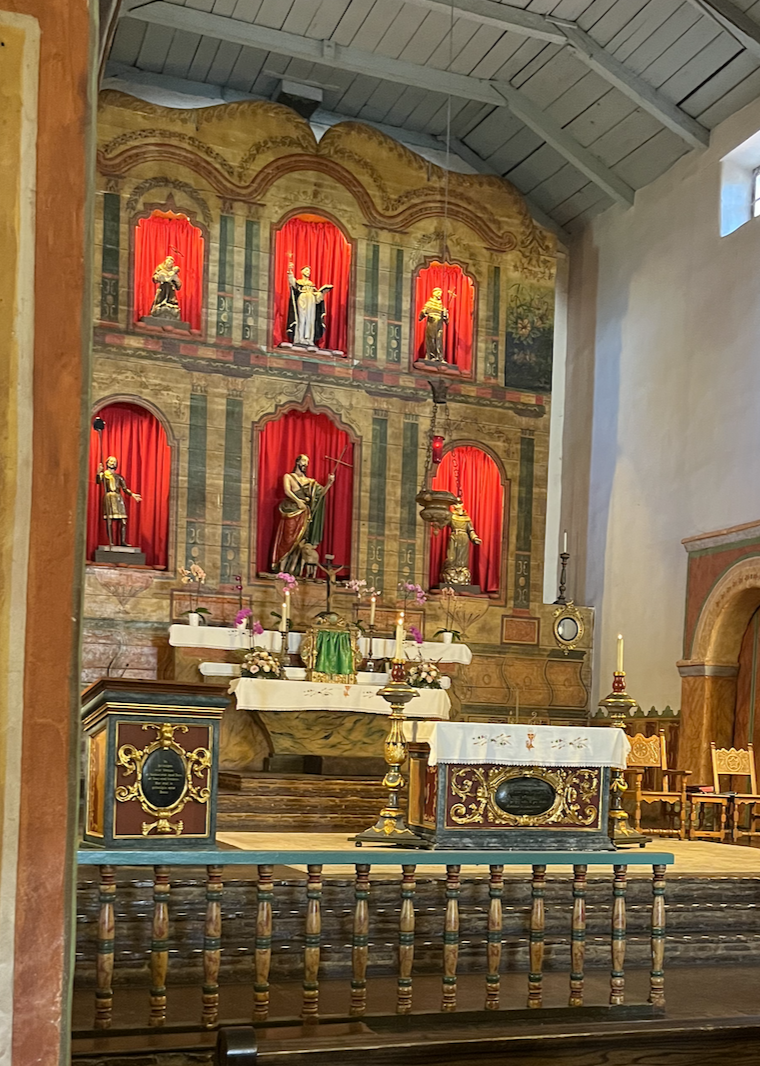
↑ Altar at Mission San Juan Bautista, St. John the Baptist is center in the lower tier, surrounded by other saints 聖胡安·包蒂斯塔傳教站的聖壇, 聖若翰洗者處下行正中,圍著他的是其他聖人 |
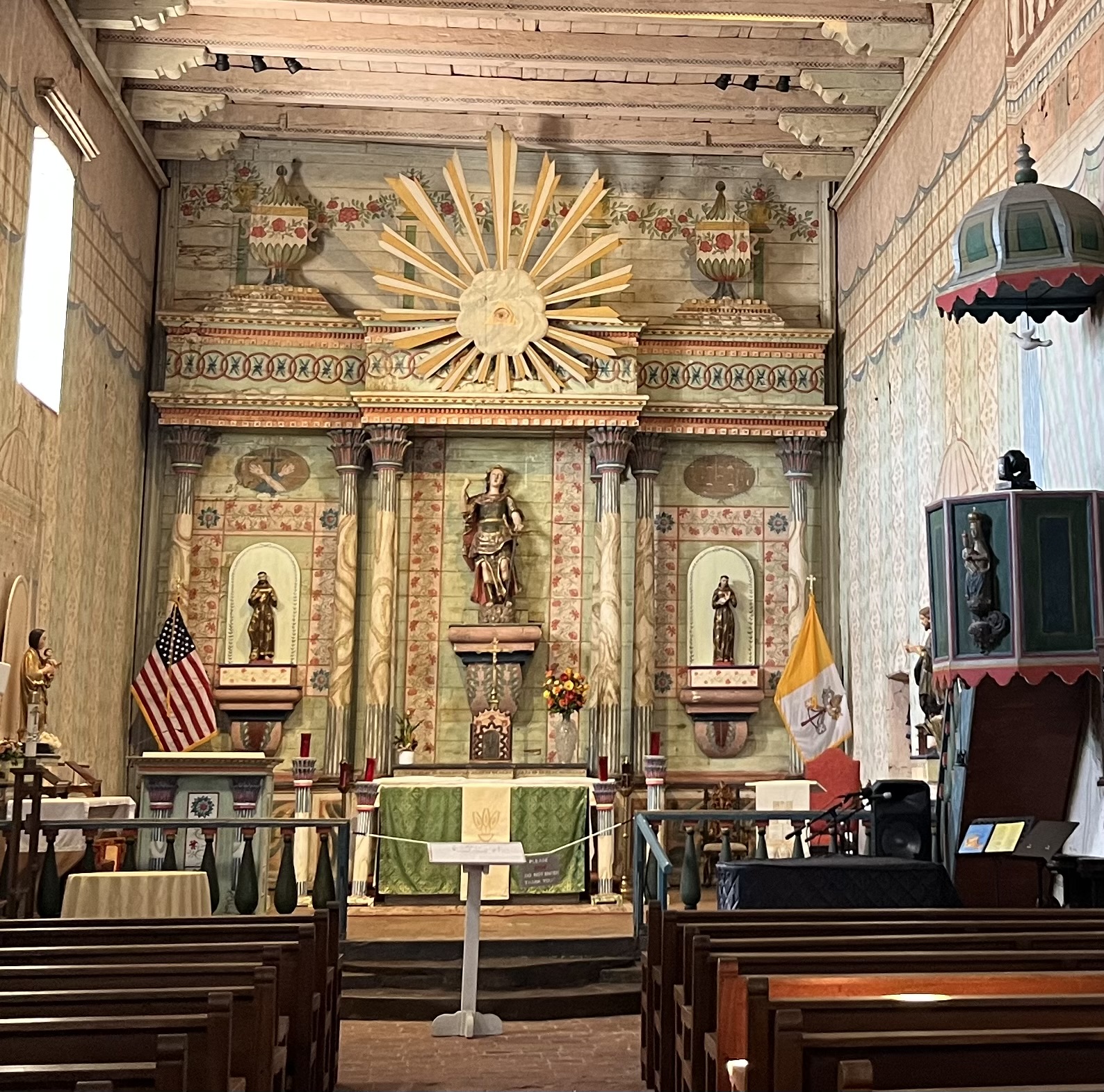
↑ Altar at Mission San Miguel, at the sides are Franciscan saints 聖米格爾傳教站的聖壇,兩側是方濟各修道士會的聖人 |
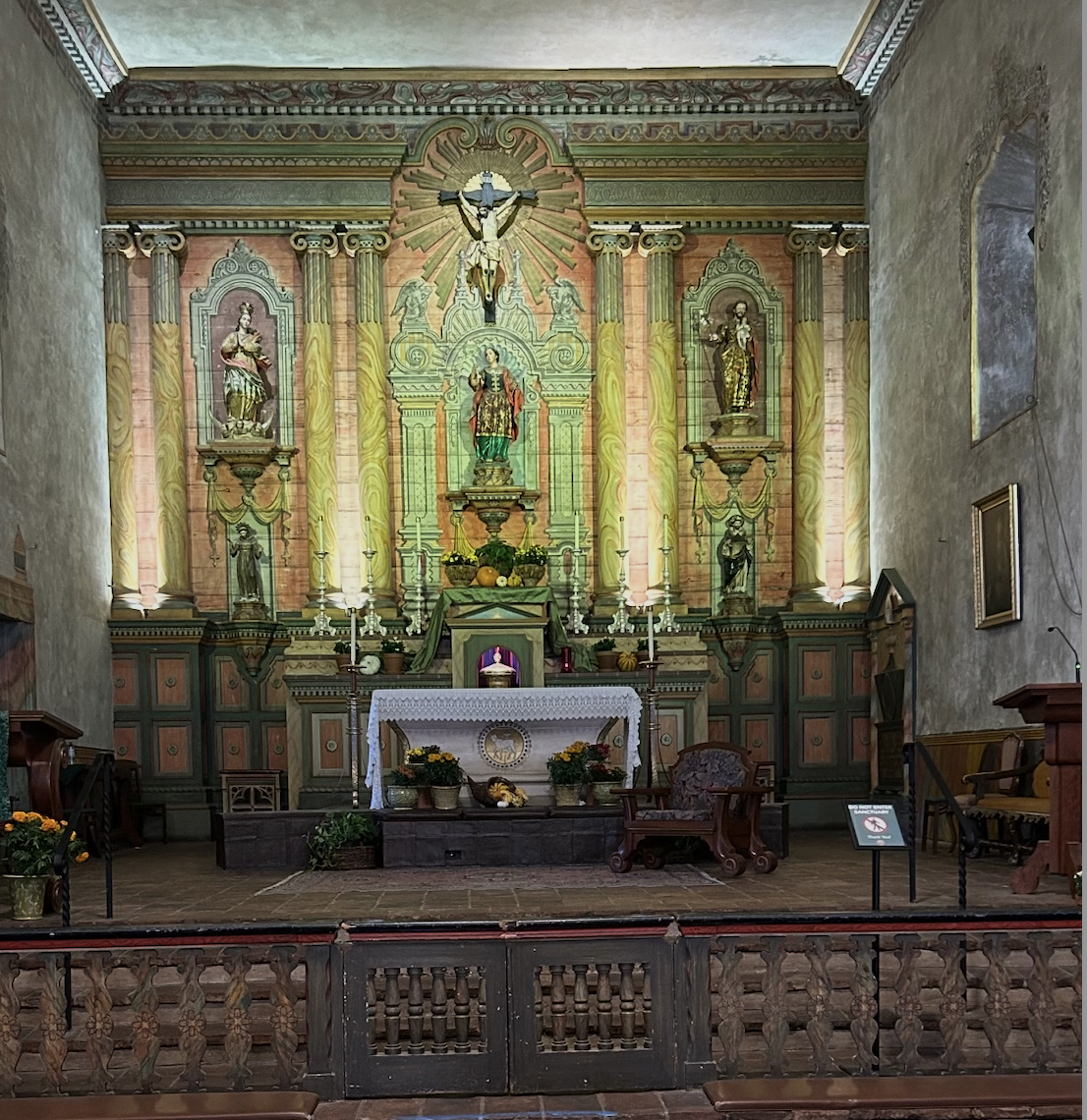
↑ Altar at Mission Santa Barbara, to the reader's left is The Virgin Mary, to the right is Saint Joseph 聖巴巴拉傳教站的聖壇,讀者左邊是貞女瑪利亞,讀者右邊是聖約瑟夫 |
6. The Strange Similarity between Bok Kai's Popular Daoism and the Missions' CatholicismFor me, the figures and settings in the Mission churches elicit emotional responses that are quite indistinguishable from that elicited by the simple incense offering worship rituals to the gods at Bok Kai. Although Catholic doctrine carefully distinguishes between worship owed to God and veneration directed toward saints, the physical and emotional experience of Mission churches seem to blur this distinction by their actual effect. Life-like figures, elevated placement, dramatic lighting, and ritualized approach create an affective environment that demands devotion in ways functionally indistinguishable from deity worship. To those who are uninitiated in Catholic doctrine, in this setting, the saints are clearly to be worshipped. And in fact, Catholicism holds that praying to the saints can result in one's wishes being granted, which is the exact reason why people pray to the Gods at Bok Kai in the first place. While at the intellectuall level the saints are said to be intercessioners rather than gods, at the emotional level they leave an impression indistinguishable from that of gods. This reveals what appears to be a commonality between Catholicism's supposedly monotheistic "sacred materiality" that elicits devotion to the saints and popular Daoism's openly polytheistic sacred materiality that elicits devotion toward the gods. Of course, Catholic theology teaches that Christ’s true presence is not in the statues but in the Eucharist ceremony performed on the altar. From this intellectual perspective then, the prominence of saints only points to their intercession and exemplarity rather than their divinity. Yet in lived religious experience, especially within mission churches where the patron saints occupy the highest and most visually commanding positions, the emotional effect of these figures is undeniable and often overrides theological nuance. To the body and the senses, such spaces call forth from beholders devotion to those figures in ways functionally indistinguishable from deity worship — the emotional effect overwhelms the doctrinal explanation. Therefore, at the emotional, affective level I feel Mission Catholicism is strangely similar to Bok Kai polytheism. |
六、北溪廟民間道教與傳教站天主教之間的奇特相似性
我的感覺是,傳教站教堂中的雕像和場景所引發的情感反應,與北溪廟中對神靈進行的簡單奉香祭拜儀式所引發的情感反應沒有顯著的分別。儘管天主教教義明確區分了對上帝的崇拜和對聖人的敬仰,但傳教站教堂的實際效果似乎模糊了這種區別。栩栩如生的人物形象、高高在上的位置、強烈的燈光以及儀式化的氛圍營造出了一個引發虔誠敬拜的情感環境,而這種虔誠敬拜跟對神靈的崇拜沒有什麼實際區別。對尚未被灌輸天主教教義的人們來說,在這種情景之下,聖人分明是要崇拜的。而事實上,天主教認為向聖人祈禱可以使願望得以實現,這也正是人們在北帝廟向各位神明祈禱的原因。雖然在思維層面上,聖人是說為為代禱者而不是神靈,但在實際的宗教體驗中,他們在情感層面上所留下的印象卻跟神靈沒有分別。這揭示了,引發對多個聖人虔誠感的一神制天主教“神聖物質形式”好像跟引發對多個神祇虔誠感的多神制民間道教“神聖物質形式”具有共同性。當然,天主教神學認為其實基督並非存在於雕像中,而是存在於聖壇上所舉行的聖體聖事儀式中。從這個角度來看,突出聖人只不過是為了表明他們有代禱和榜樣作用,而不是他們有神性。然而,在實際的宗教體驗中,尤其是在主保聖人雕像佔據著最高、最引人注目位置的傳教站教堂里,這些人物形象的情感效果往往會覆壓神學所論述的細節。對於身體和感官而言,這樣的空間所對身體和感官所呼喚出來的虔誠感跟祭拜神靈所呼喚出來的虔誠感相同,情感效果壓倒了教義解釋。因此,在情感層面,我覺得傳教站的天主教與北溪廟的多神教奇特地相似。 |
| This strange emotional similarity is absent in a Protestant church, where Protestantism has explicitly broken with Catholicism's icons and figures. The emotional similarity can be considered a common trait that the religious traditions of Bok Kai Temple and the Mission churches share that differentiates them from America's Protestant religious mainstream. Of course, Bok Kai represents a tradition that is even less mainstream than the Missions' Catholicism. | 這種奇特的感情相似性在基督新教教堂中並不存在,因為新教已經明確地與天主教的聖物和聖像劃清了界限。這種感情相似性可以被視為北溪廟和傳教站教堂各自代表的宗教傳統共同擁有的一個特徵,使它們有別於美國的主流宗教。當然,北溪廟所代表的傳統比傳教教堂更加非主流。 |
| Where Bok Kai's popular Daoist tradition and the Missions' Catholicism differ sharply is that while popular Daoism openly acknowledges the emotional reverence and devotion towards multiple holy beings elicited by the temple's sacred materiality as being polytheist, Catholicism does not. Instead Catholicism layers on this equal emotional feeling of reverence and devotion towards more than one being an intellectual labeling: that for God is worship and that for the saints is only reverence. | 這裡北溪廟的民間道教與傳教站的天主教有一個顯著的差異:民間道教公開承認寺廟神聖物質性所激發的對眾多神靈的情感上的崇敬與虔誠是一種多神論信仰,而天主教則不然。相反,天主教在這種對多個神聖的同等情感上的崇敬與虔誠之上,附加了一種思維性的標籤:對上帝的虔誠是崇拜,而對聖徒的虔誠則只是崇敬。 |
7. SummaryThe Bok Kai Temple and the Missions in California, USA, are indeed surprisingly quite different in several important non-religious ways. Bok Kai is a grassroots institution built by the Chinese community in California to meet their community needs, while the Missions are large-scale institutions established by the Spanish Empire in the frontiers of New Spain (California) to expand and consolidate the Empire's territories and to convert the indigenous people to Catholicism and thus into loyal subjects. The Bok Kai Temple provided much practical assistance to the Chinese community, but the Missions inflicted great harm on the indigenous people who constituted the majority of the Mission population: an associated catastrophic decline in the native population. At the religious level, Bok Kai's Daoism is polytheistic, worshipping the Great God of the North as the main deity, who played a decisive role in the community, along with other deities relevant to the main concerns of the Chinese people. The Missions' Catholicism is monotheistic, but it also venerates saints, placing statues of patron saints at the central focus of the church altar. The devotion to multiple saints inspired by missionary churches is at the emotional level very similar to the devotion to multiple deities inspired by Beixi Temple, and and in both, devotion to human form spiritual beings is shaped and sustained through concrete and tangible "sacred materiality". This common trait distinguishes both from the mainstream Protestant churches in the United States. |
七、总结
美國加州北溪廟和傳教站的確令人意想不到地在多個非宗教方面存在着顯著的差別,北溪廟是美國加州華人自發的、為了滿足社區需要而建造的草根規模場所,而傳教站則是西班牙帝國為擴張和鞏固邊疆領土,以及把原住民轉化為信仰天主教的忠誠臣民,在新西班牙的邊疆加利福尼亞所設立的宏大規模工程。北溪廟為華人社區的人們提供了很多實際性的幫助,但傳教站對佔其人口大多數的原住民們提供了的卻是巨大的實際性傷害:相隨的災難性人口銳減。在宗教層面上,北溪廟的道教是多神制,供奉的主神是對當年社區洪水災害具有決定性功能的北帝,亦有其他對當年華人主要關切具有重要功能的神祇。傳教站的天主教是一神制,但亦崇敬聖人,把主保聖人雕像放在教堂神壇的中心焦點。傳教站教堂引發人們對多個聖人的虔誠,與北溪廟引發人們對多個神祇的虔誠,在情感層面上高度相似,而兩者都通過具體而可感的“神聖物質形式”來塑造和維繫這種虔誠。兩者都在这個特點上相同地有別於處美國宗教主流地位的基督新教。 |
| By discovering and comparing these differences and similarities, I have gained a deeper understanding of California history and the history of the Chinese and the Native people in California, as well as the history of the missions. This exercise has also given me some insights into the doctrines and practices of Daoism, Chinese folk religion, Catholicism, and Protestantism. It's been very meaningful. | 通過发现和比較這些差別和相似,我進一步認識了加州歷史和加州的華人、原住民、及傳教站歷史,也對道教、中國民間道教、天主教、和基督新教的教義與實踐獲得了一些啓發,很有意義。 |
Footnotes |
脚注 |
|
|
|
|
|
|
|
|
|
|
|